
And yet you may be doing this every day when you send prompts to public AI tools
And yet you may be doing this every day when you send prompts to public AI tools.
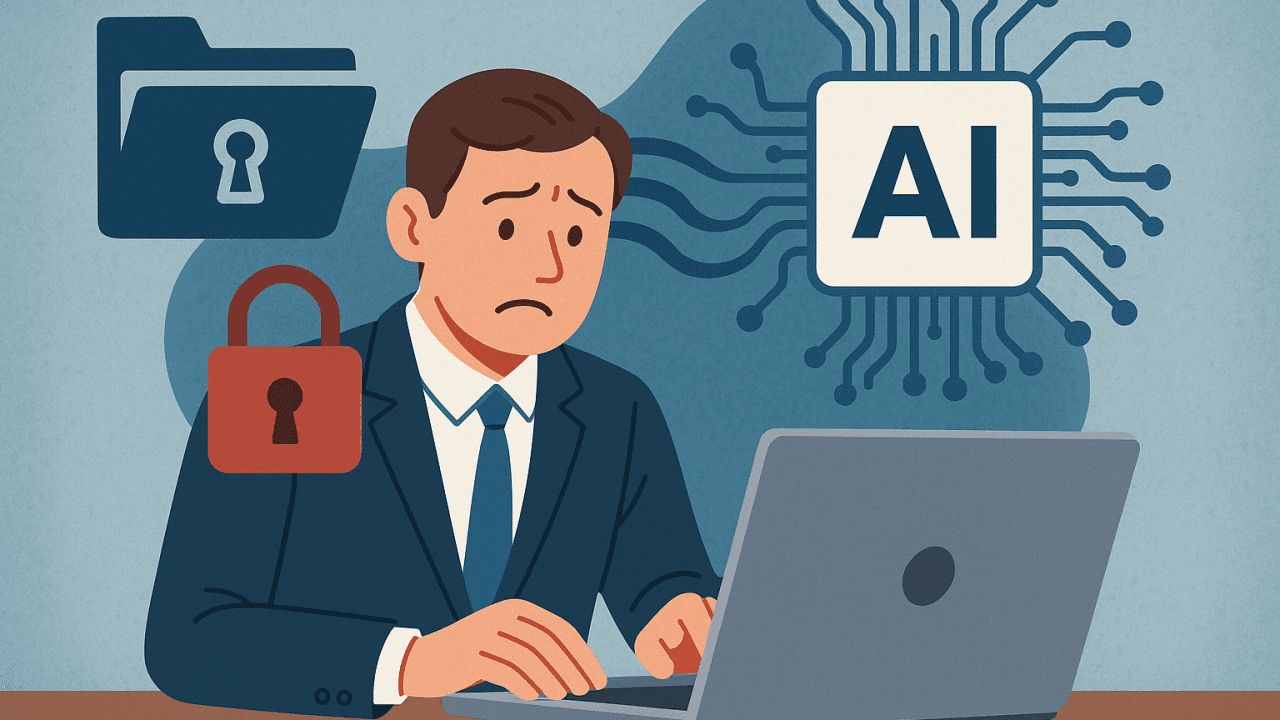
Every day, enthusiastic teams test ChatGPT, Bard, Copilot, and other publicly available models. "Look how fast it wrote this report!" managers tell me. "And here it optimized this block of code," developers add. In that same moment, however, information that makes the company unique is flowing into the cloud: confidential margins, specific algorithms, and methods validated through years of practice.
What you send to a public model today can become your lost advantage tomorrow.
At first glance, nothing seems wrong. The answer arrives, the task is done, everyone is satisfied. But on the other end of the cable, the model learns from every word.
The process that gives this learning structure is called reinforcement learning from human feedback (RLHF). The logic is simple: the model proposes an output, and the user either explicitly rewards it (thumbs up) or continues the conversation. Both are signals of "reward." The more rewards, the more firmly this newly acquired knowledge can become embedded.
Imagine a barista who gets a generous tip every time they prepare your coffee exactly to your taste. In a few weeks, they no longer ask. They remember your preference and offer the same blend to anyone similar. Public language models work similarly: once a model learns that "this code is better" or "this is the correct margin setup," it can offer the same quality to others, including your competitors. And you handed over the recipe for free.
If you own unique domain knowledge, does that make strategic sense? Usually not. Instead of maintaining your informational edge, you are sponsoring the development of someone else's product and helping erase differences between you and other market players.
So what can you do? The fastest patch is routing all AI prompts through an internal proxy gateway. It logs every prompt and response and can warn when sensitive parts appear in text, such as key algorithm logic or financial data. Users can immediately decide whether those details really need to leave the company or whether a more generic prompt is enough.
The second, more sophisticated option is using a sandbox environment. Some cloud providers now allow disabling conversation storage for central training. It is not a 100% guarantee, but it significantly reduces risk. In practice, you send only anonymized instructions to the model while sensitive context stays behind your firewall.
The third and most effective long-term path is building your own model workflow, or at least fine-tuning open models such as Llama 3, Mistral, or Chronos. How? Start with proxy logs: they contain a goldmine of real prompts and validated expert responses. Once labeled and cleaned, you can use them for additional training, either fully on-premise or in private cloud environments. The result is AI that understands your domain nuances without exporting them.
To make it concrete, consider two real-world situations.
Developers often paste entire blocks of proprietary code into public chat asking for refactoring. The immediate benefit is clear: time savings. The long-term loss is less visible: you expose not only syntax, but also architectural patterns your company relies on. In many cases, an internal code chat over your own repositories would solve this without data leaving your boundary.
Managers often use AI for pricing experiments. They include real margins, discount policies, and costs in prompts. The model calculates scenarios and returns a clean table. But once this information becomes part of training signals, competitors may gain similar insight into trends and price ranges, even unintentionally. A practical fix is a local RAG module (retrieval-augmented generation): confidential numbers stay on company servers, while public models only receive anonymized placeholders.
We are moving toward a future where nearly every company will use AI. Market position will be shaped less by access to AI itself and more by the quality and exclusivity of the data you feed it. Those who protect their know-how today will protect their market edge tomorrow.
Send me your question
Have a question about the article or want to discuss a related topic? Send me your email and write your question.