
Software development today: what a serious AI approach looks like when it must work in production
I have trained several teams, and the same question keeps returning everywhere: how do we develop software today so it is truly production-grade?
Not a demo. Not a three-day prototype. But a system that is predictable, operable, and secure.
Vibe-coding is useful. It brings speed, ideas, and momentum. But if you are building a product that must run reliably, "we wrote something and it kind of works" is not enough. Production software needs a different rhythm.
Where it starts: not with code, but with understanding
For years, one classic software pain repeated itself: documentation was written at the end, when teams no longer remembered why key decisions were made.
Today, we do the opposite. We start by clarifying client requirements and writing specification before implementation.
This is where OpenSpec on GitHub has worked very well for me. It is a framework for spec-driven development, meaning we align "what and why we build" first, and code second. OpenSpec keeps this practical: each change has structure, proposal, technical design, and implementation tasks. The advantage is simple but fundamental: AI and people work from the same contract, not from impressions left by the last chat.
What a normal team day looks like
During the day, teams produce many specs. Not one giant document, but a set of smaller, clearly bounded changes. Each one has a goal, context, expected behavior, and quality criteria.
Once this layer is ready, implementation runs through agents. Most often Codex CLI or Claude Code. Both tools perform well when inputs are clean and rules are explicit.
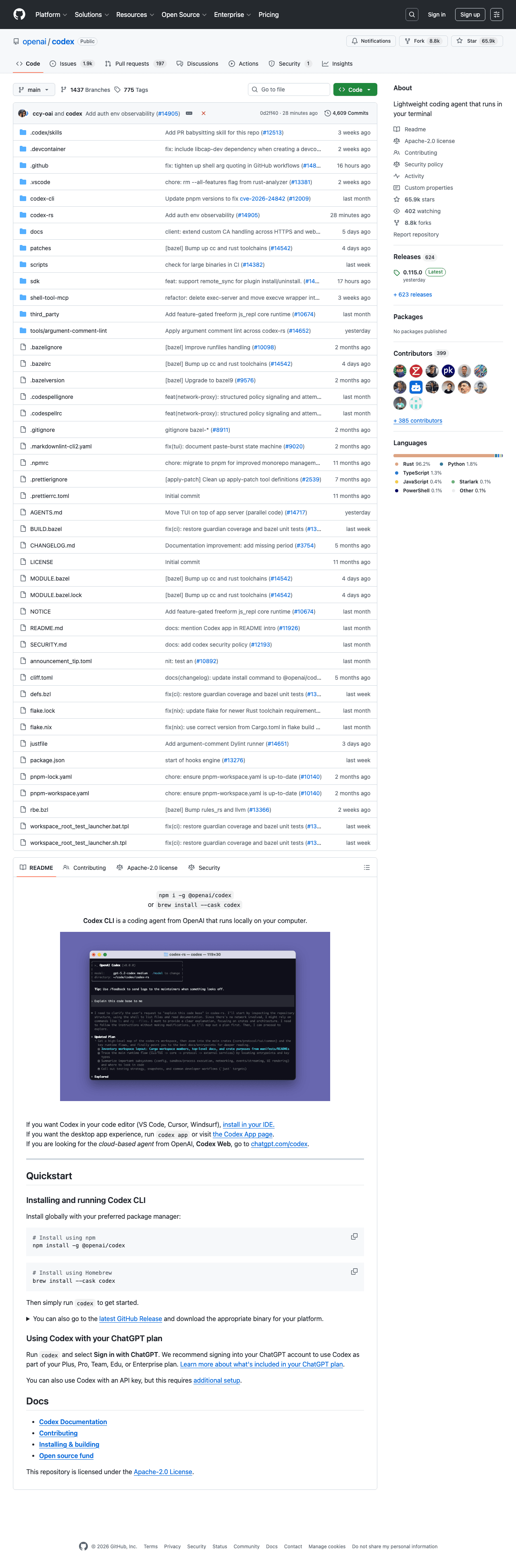
The key is shared skills across the company. In practice, this is company know-how converted into explicit instructions: how we build frontend, how we implement backend, how we handle DevOps, how we enforce security checks. That prevents each output from being reinvented from scratch.
What happens overnight
When specs are prepared, it often makes sense to run larger implementation batches during cheaper token windows, typically overnight.
An agent takes the spec, implements changes, executes tests against expected behavior, then passes output into review. A code-review agent follows and flags weaknesses, optimization opportunities, and deviations from standards.
So in the morning, you do not return to an empty editor. You return to a partially completed result that already passed multiple control layers.
The developer role changes, not disappears
This matters: developers are not removed from the process. Quite the opposite.
Developers validate whether implementation matches intent. Very often they discover that something in the spec still needs refinement. That is not a failure. It is normal iteration.
At that point they update specification, add missing requirements, sharpen behavior, and prepare the next run. Critical sections are solved actively with AI in paired mode, where human judgment in real time has the highest value.
This creates a stable rhythm: specification, implementation, test, review, refinement, next run.
Why this model beats "I will solve the hardest thing first"
In the traditional mode, an experienced engineer starts with the hardest problem, spends more time than expected, and routine work is postponed. The project slows down not because people are weak, but because capacity is finite.
In this model, routine and medium-complexity work is continuously implemented via AI. It does not pile up into backlog bottlenecks. People keep capacity for architecture, risk-heavy parts, and product priorities.
The outcome is usually higher project maturity than before. Not because AI writes better code than humans, but because teams finally have time for things that used to be constantly postponed.
Closing
Serious software development in 2026 is not about choosing "AI or no AI." It is about integrating AI into a controlled process.
If you want production software, you need specifications, shared standards, tests, review, and iteration. AI can dramatically accelerate the process, but only when strong guardrails are in place.
Vibe-coding is a good starting mode. Production needs a system. And today, we can build that system.
Send me your question
Have a question about the article or want to discuss a related topic? Send me your email and write your question.